How Upper Trapezius Muscle Dysfunction Contributes to Post-Concussion Symptoms in Kansas City Patients
Upper trapezius muscle dysfunction can worsen post-concussion symptoms like headaches and neck pain. Kansas City chiropractor Dr. Lance Stevenson explains how this muscle issue affects patients in Independence, Grandview, and Leawood during recovery.
Lance Stevenson, DC
11/10/20253 min read
How Upper Trapezius Muscle Dysfunction Contributes to Post-Concussion Symptoms in Kansas City Patients
Still dealing with headaches, neck tension, or dizziness after a concussion or car accident? You might be surprised to learn that one of the biggest culprits is your upper trapezius muscle — often shortened, tight, and overworked after trauma.
At our Kansas City clinic, Dr. Lance Stevenson, DC regularly treats patients whose lingering post-concussion symptoms are connected not only to the brain, but to the neck and shoulder muscles — especially the upper trap.
What Is the Upper Trapezius?
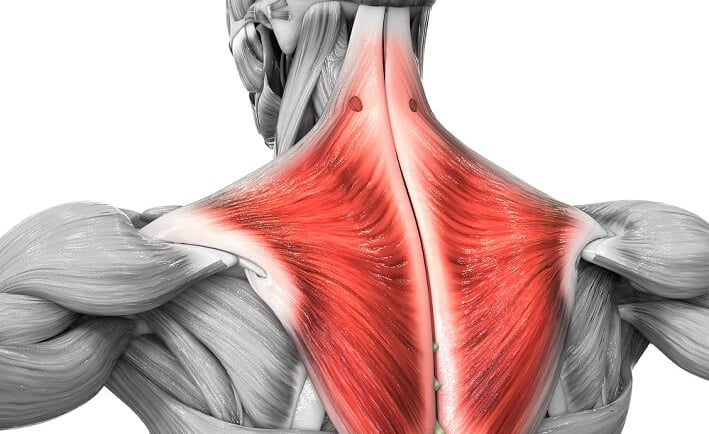
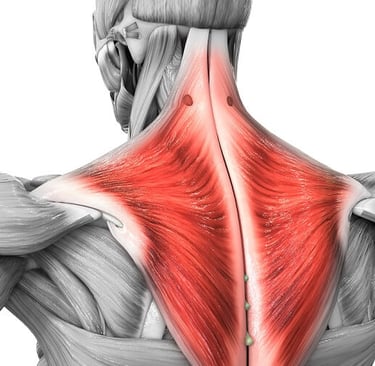
The trapezius is a large, triangular muscle that spans from the base of your skull down to the middle of your back. The upper portion (upper trap):
Connects the base of the skull and cervical spine to the shoulder
Elevates the shoulders and helps turn or tilt the head
Plays a key role in neck posture, head stability, and muscle tension patterns
While it’s essential for movement and support, the upper trap is very prone to overuse and guarding — especially after a head or neck injury.
Why the Upper Trapezius Becomes a Problem After a Concussion or Whiplash
After a concussion, especially one caused by a car crash, fall, or sports injury, the upper trap may:
Become hypertonic (excessively tight)
Develop trigger points that refer pain
Compensate for weakness or dysfunction in nearby stabilizers
Create abnormal tension on the neck and base of the skull
Irritate nearby nerves and joints
This leads to a cycle where the upper trap tries to “protect” the brain and neck — but ends up making things worse.
How Upper Trap Dysfunction Worsens Post-Concussion Symptoms
Patients from Lee’s Summit, Overland Park, Liberty, and Shawnee often experience:
💢 Tension Headaches
Upper trap trigger points refer pain up the neck and into the temple, jaw, or behind the eyes — mimicking migraine or cluster headaches.
🌀 Dizziness and Disequilibrium
The trap pulls on the cervical spine and base of the skull (C0–C2), altering proprioceptive input and affecting reflexes like the cervico-ocular reflex (COR) and vestibulo-ocular reflex (VOR) — both of which influence balance and visual stability.
👁️ Visual Strain and Fatigue
Tension in the upper traps and surrounding neck muscles can interfere with head-eye coordination, causing blurred vision, motion sensitivity, and visual fatigue.
🧠 Cognitive Fatigue and Fog
Muscle guarding in the neck and shoulders drains energy and increases sensory mismatch — leading to more mental fatigue, especially in visually or cognitively demanding environments.
Common Signs of Upper Trap Involvement in PCS
Headaches that worsen with posture or shoulder tension
Tightness or “knots” along the top of the shoulders
Neck pain that radiates into the head or eyes
Dizziness when turning the head or raising the arms
Fatigue or discomfort after sitting at a desk or using a phone
One shoulder visibly higher than the other
How We Treat Upper Trapezius Dysfunction in Kansas City
At our clinic, Dr. Lance Stevenson, DC evaluates the cervical spine, visual-vestibular system, and upper body muscle function to identify the true source of lingering PCS symptoms.
Treatment may include:
✅ Manual release of the upper trapezius and levator scapulae
✅ Postural retraining to reduce shoulder and neck strain
✅ Cervical spine mobilization to improve alignment and motion
✅ Proprioceptive integration drills to reset faulty input from neck to brain
✅ Breathing and autonomic regulation (to reduce muscle guarding caused by sympathetic dominance)
✅ Laser-guided head repositioning exercises for neck-eye control
Most importantly, we address the trap's connection to the brainstem, balance, and vision systems — which is why our concussion care is more than just pain relief.
Don't Let Tension Hold Back Your Concussion Recovery
If you’re still dealing with dizziness, neck tightness, or visual overload after a concussion or car accident — and your shoulders feel like they're doing all the work — your upper traps may be sabotaging your recovery.
At our Kansas City injury clinic, Dr. Lance Stevenson, DC helps patients from Blue Springs, North Kansas City, Raytown, and Parkville finally move forward by treating both the brain and the body together.
Call 816-226-7476 today to schedule your evaluation and learn if upper trap dysfunction is part of your PCS symptoms.
Special thanks to Complete Concussions for their training and educational resources. To learn more about comprehensive concussion treatment options, visit completeconcussions.com.
Disclaimer:
This blog is for educational purposes only and is not intended to diagnose, treat, or replace medical advice. If you have experienced a concussion or other injury, please consult a qualified healthcare provider. Always follow the advice and treatment plan given by your medical professional.
Been in an Accident? Start Here.
Call us today for a free consultation or with any questions.
Expert Personal Injury Care
Whiplash Chiropractor in Kansas City
Lance@ChiroKC.com
816-226-7476
© 2025 Lance Stevenson, DC, LLC. All rights reserved.
Disclaimer: The content provided on this page is for informational and educational purposes only and is not intended as a substitute for professional medical, legal, or insurance advice. While every effort is made to provide accurate and up-to-date information, it should not be relied upon as the sole basis for decisions regarding your health, legal matters, or insurance claims. Please consult with your healthcare provider, attorney, insurance company, or other relevant professionals for personalized guidance tailored to your specific situation.
1010 Carondelet Dr., Suite 416
Kansas City, MO 64114